
Transnational repression—when governments reach beyond their borders to coerce, intimidate, or harm critics and members of their diasporas—poses urgent risks to democracy and social cohesion in Canada. The Final Report of Canada’s Public Inquiry into Foreign Interference called transnational repression “a genuine scourge” and said that “the government must take this seriously and consider ways to address it.” It found that China “is the most active perpetrator of foreign interference targeting Canada’s democratic institutions.”
The Canadian government is advancing several important initiatives to counter foreign interference and transnational repression, such as establishing a Foreign Influence Transparency Registry, publicly reporting transnational repression campaigns, and engaging affected diaspora communities. Less commonly discussed, however, is the importance of addressing anti-Asian racism in building community trust and buy-in to more effectively confront foreign interference and transnational repression.
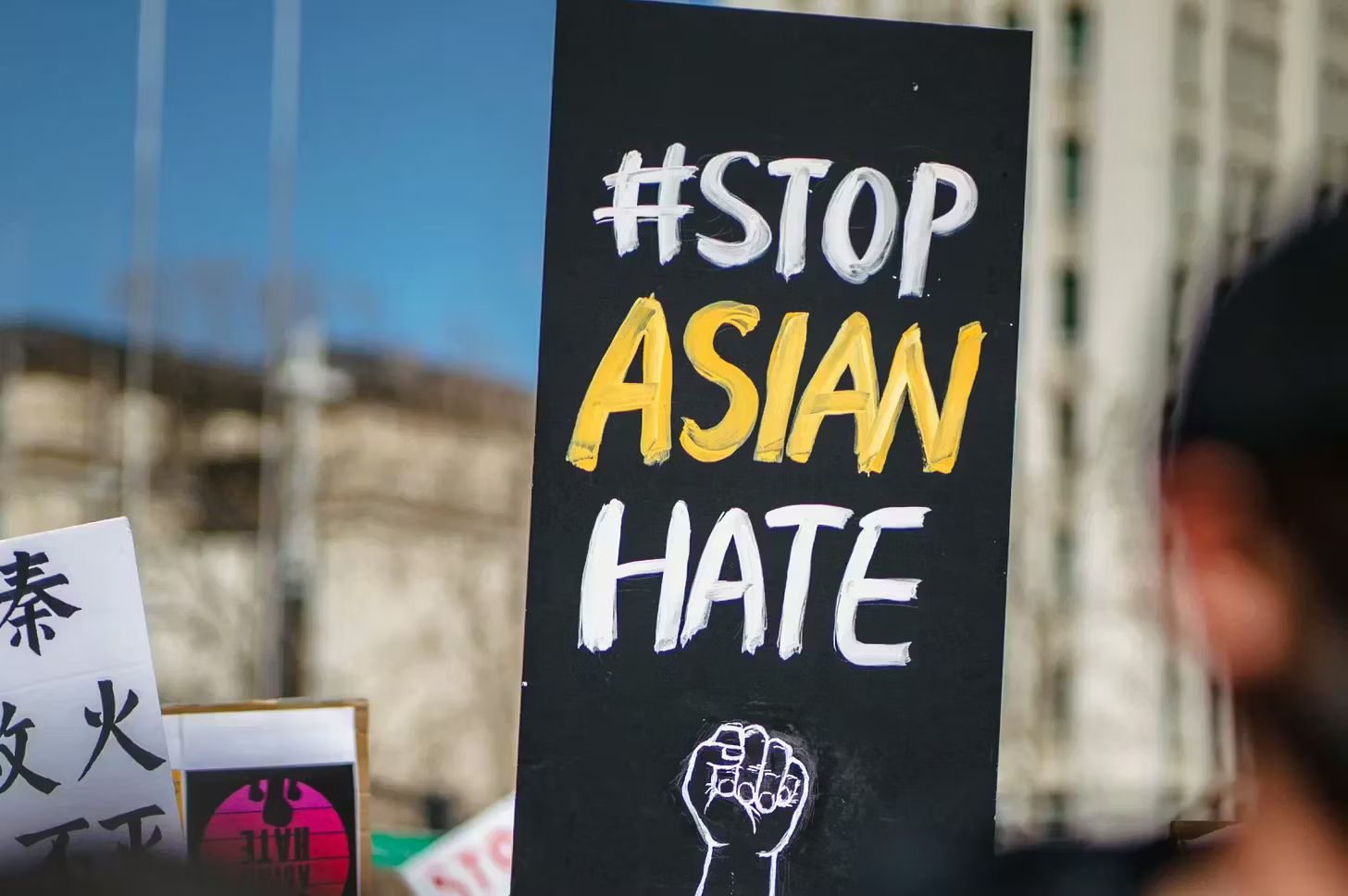
In June 2024, Digital Public Square ran a survey to better understand attitudes towards foreign interference and transnational repression in Canada. In designing this project, we were aware of the risk that increasing awareness of the Chinese government’s interference and transnational repression campaigns could unintentionally result in increased anti-Chinese and anti-Asian sentiment. As such, we sought to measure public opinion towards anti-Asian racism in Canada and see if there was a relationship with awareness of foreign interference and transnational repression.
Overall, 44% of survey respondents agreed that anti-Asian racism is a “significant problem” in Canada. This figure was higher among those who identified as ethnically Chinese (59%) and ethnically Chinese from Hong Kong (55%). Further, 55% of respondents agreed that they worry that reports into Chinese foreign interference could lead to increased anti-Asian racism. This was also higher among respondents who identified as ethnically Chinese (68%) and ethnically Chinese from Hong Kong (66%).
That approximately two-thirds of Canadians who identify as ethnically Chinese or ethnically Chinese from Hong Kong worry that reports of foreign interference from China could lead to an increase in anti-Asian racism curtails our collective ability to respond to these threats. The majority of Canadians (62%) said foreign interference is a serious issue, but this was lower among respondents identifying as ethnically Chinese (53%) and ethnically Chinese from Hong Kong (52%).
These survey results show two key trends. First, a strong majority of Canadians who identify as ethnically Chinese or ethnically Chinese from Hong Kong see a direct connection between reports of Chinese foreign interference and anti-Asian racism. Second, these communities are less likely to view foreign interference in Canada as a serious problem.
While further research is needed to dissect these relationships, the data suggests that ethnically Chinese communities may see foreign interference as a less pressing issue because of how they may be negatively impacted by responses to it. In other words, despite being disproportionately impacted by Chinese foreign interference and transnational repression, community buy-in to respond to these threats is inhibited—in part because they have to contend with anti-Asian racism.
There is good reason for diaspora communities to feel this way. Singling out a particular country as a malign threat actor risks inviting backlash and discrimination towards people who have a connection with that country. For example, Chinese Canadians experienced an increase in discrimination during the COVID-19 pandemic after some labeled it the “China virus” or a Chinese bioweapon.
In light of these dynamics, Digital Public Square designed an educational awareness-raising campaign about foreign interference and transnational repression from China that sought to increase awareness of the issue while also increasing empathy for affected communities. As part of our awareness-raising strategy, we sought to emphasize that diaspora communities are the groups most likely to be victims of foreign interference campaigns—rather than agents of such campaigns.
Working in collaboration with diaspora communities, we hypothesized that by raising awareness of how foreign interference impacts diasporas, we could increase knowledge of the issue while avoiding backlash. We then tested the effectiveness of our content in a randomized controlled trial (RCT) with three groups: one that engaged with our Dangers Without Borders narrative platform, one that engaged with educational tip sheets about the issue, and a control group that did not engage with any content.
The RCT showed that those who engaged with Dangers Without Borders scored the highest on awareness indicators, including perceived severity of the issue, knowledge accuracy, and attitudinal shifts. Those who engaged with Dangers Without Borders reported warmer feelings towards Chinese Canadians than those who only read the tip sheets, and were the most likely to view Chinese Canadians as targets of the Chinese government.
The experiment showed that a visually engaging storytelling approach that emphasizes impacts on victims and affected communities is an effective way to raise awareness about foreign interference and transnational repression while avoiding backlash. Describing how these threats impact real people and communities instead of speaking to impersonal concepts like national security helps make complex issues resonate with the general public.
Designing outreach and awareness-raising campaigns that are cognizant of anti-Asian sentiment is just a small part of addressing the problem. At a minimum, educational campaigns about foreign interference and transnational repression need to avoid creating backlash against the communities already at greatest risk. Ideally, they should actively fight back against anti-Asian racism.
Deepening engagement with diaspora communities and funding broader efforts to address anti-Asian racism throughout society are some ways that the Canadian government and civil society can strengthen social cohesion and improve our collective ability to respond to foreign interference and transnational repression.
If you are interested in learning more about our Foreign Interference Resilience and Education Initiative, please reach out to hello@digitalpublicsquare.org